
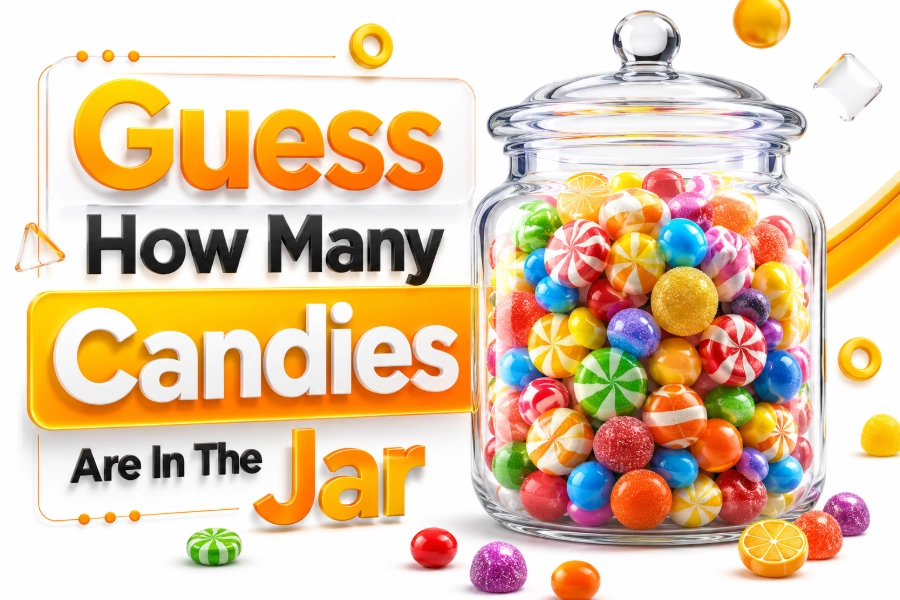
Guessing games have always been popular because they are simple, fun, and easy for everyone to join. The game “guess how many candies are in the jar” works well at parties, classrooms, offices, fairs, and family events without needing complicated rules.
The idea is simple. A clear jar is filled with candies, and each person writes down their best guess. The person whose number is closest to the real total wins a prize, the candy jar, or another small reward.
This game feels exciting because it mixes curiosity, observation, and luck. People enjoy studying the jar, comparing candy sizes, and making clever guesses. It creates conversation, friendly competition, and a memorable activity for guests of all ages.
Why This Candy Jar Guessing Game Works So Well
A candy jar guessing game works because it needs very little preparation but still attracts attention quickly. A colourful jar filled with sweets naturally draws people in, especially when there is a prize connected to the closest guess.
The game also fits many occasions because it does not require special skills. Children, adults, students, coworkers, and guests can all participate equally. That makes it useful for events where people have different ages, interests, and comfort levels.
Another reason it works well is the suspense. People usually keep checking the jar and asking about the final count. This small mystery keeps them engaged until the winner is announced at the end of the event.
Best Occasions for a Candy Jar Guessing Contest
This game is perfect for birthday parties because it gives guests something fun to do between food, music, and other activities. It can also match the party theme by using candies in selected colours, shapes, or flavours.
Schools often use this game during fairs, classroom celebrations, reading weeks, and fundraising events. It encourages counting, estimation, and basic math thinking while still feeling like a relaxed activity instead of a formal lesson.
Offices and community events can also use this contest to break the ice. A candy jar placed near the entrance, reception desk, or activity table can encourage people to interact naturally and enjoy a light moment.
Quick Event Ideas
- Birthday party candy guessing station
- School fair estimation challenge
- Office holiday contest
- Baby shower sweet jar game
- Wedding guest table activity
- Fundraising booth game
- Classroom math estimation activity
- Family reunion guessing contest
For more fun game ideas, you can explore our guessing games collection and choose activities that match your event style.
Choosing the Right Jar for the Game
The jar you choose can change how easy or difficult the game feels. A clear glass or plastic jar is best because players need to see the candies from different angles before making their guesses.
A medium-sized jar is usually the easiest option for most events. If the jar is too small, the game may feel too simple. If it is too large, counting the candies later may become time-consuming and less practical.
The shape of the jar also matters. Tall narrow jars, round jars, and square jars create different guessing challenges. A jar with straight sides is easier to estimate, while curved jars can make the contest more surprising.
Choosing the Best Candy for the Jar
Small candies are often best because they fill the jar neatly and make guessing more interesting. Jelly beans, chocolate buttons, hard candies, gumdrops, wrapped sweets, and mini candy pieces all work well for this type of game.
Large candies can still be used, but they make the total number lower and easier to estimate. If you want a more challenging contest, choose smaller candies with similar shapes so the jar looks full and visually balanced.
Wrapped candy is helpful when the winner will take the jar home. It feels cleaner and easier to share. Unwrapped candy can look colourful, but it should only be used when hygiene and food safety are carefully handled.
Candy Options by Difficulty
| Difficulty Level | Candy Type | Best Use |
| Easy | Large wrapped chocolates | Kids’ parties |
| Medium | Gumdrops or marshmallows | Family events |
| Hard | Jelly beans or small sweets | School fairs |
| Very Hard | Mixed tiny candies | Fundraisers |
| Decorative | Colour-themed candies | Weddings or showers |
How to Set Up the Candy Jar Game
Start by selecting a clean jar and filling it with your chosen candy. Count every piece carefully before the event begins. Write down the final number and keep it hidden until the winner is announced.
Place the jar in a visible area where guests can look at it easily. Add a sign with simple instructions, entry slips, pens, and a collection box. Make sure everyone knows whether they can enter once or more than once.
To make the setup look better, decorate the table with themed colours, small signs, or prize cards. A neat display makes the game feel more official and encourages more people to participate during the event.
Simple Rules for Fair Play
Clear rules help avoid confusion when the game ends. Each player should write their name, contact information if needed, and one guess on an entry slip. The guess should be a whole number, not a range.
Decide what happens if two people guess the same closest number. You can give the prize to the first entry received, choose a random winner between tied players, or prepare a small second prize for fairness.
Also explain whether people can touch, lift, or rotate the jar. For most events, it is better to allow viewing only. This keeps the jar safe, protects the candy, and keeps the contest fair for everyone.
Smart Ways to Guess the Number of Candies
A smart guess usually starts with looking at the bottom layer. Players can estimate how many candies cover the base of the jar, then multiply that number by the estimated number of layers from bottom to top.
Another method is comparing candy size with jar size. If the candies are small, the count may be much higher than it appears. If the candies are large or irregular, there may be more empty space inside the jar.
Players can also look for patterns in the jar. Candies often settle unevenly, especially near the sides and top. A careful guess considers empty spaces, candy shape, and how tightly the pieces are packed together.
For number-based practice, our number guessing game can help visitors enjoy similar estimation challenges online.
How to Count the Candies Accurately
Counting the candies before the event should be done slowly and carefully. The easiest method is to count in groups of ten, then record each group on paper until the full jar is filled.
If you are using mixed candies, keep the count simple by counting every candy as one piece. Avoid changing rules after the contest starts, because that can make participants feel the result was not handled fairly.
After the event, count again before announcing the winner if you are unsure. This extra step prevents mistakes, especially when the jar contains many small candies. Accuracy matters because the winner depends on the final number.
Prize Ideas for the Winner
The simplest prize is the candy jar itself. Many people enjoy winning the full jar because it feels directly connected to the game. This option is easy, affordable, and suitable for most casual events.
For bigger events, you can add a gift card, small toy, event voucher, or themed prize basket. A better prize can increase participation, especially when the contest is part of a school fair or fundraiser.
If children are playing, choose safe and age-appropriate prizes. Stickers, books, craft kits, small games, or sweet treats can work well. For adult events, coffee cards, desk items, or seasonal gifts may feel more suitable.
Fun Prize Options
- Full candy jar
- Small gift card
- Party favour box
- Sweet treat basket
- Classroom reward item
- Event ticket or voucher
- Branded office gift
- Mystery prize bag
Design Ideas for a Better Candy Jar Display
A good display makes the game more attractive and easier to understand. Use a clean table, clear sign, and simple entry cards. Guests should immediately know what to do without asking several questions.
Colour matching can make the jar look more polished. For example, red and white candies can suit Valentine’s Day, pastel candies can suit baby showers, and bright rainbow sweets can suit children’s parties.
Lighting also helps. Place the jar somewhere bright enough for people to see the candies clearly. Avoid dark corners or crowded tables, because guests may skip the game if it feels hard to access.
Common Mistakes to Avoid
One common mistake is forgetting to count the candies before the event begins. If the jar is already open or moved around, it becomes harder to confirm the original total and announce a fair winner.
Another mistake is using a jar that hides too much of the candy. Frosted glass, dark plastic, or heavy decoration can make guessing frustrating. A transparent jar keeps the game fair and visually appealing.
Poor instructions can also reduce participation. If guests do not know where to enter, how many guesses are allowed, or when the winner will be announced, many people may simply ignore the activity.
Making the Game Educational for Kids
This game can support learning because children practise estimation, counting, multiplication, and comparison. Instead of simply guessing randomly, they can think about layers, groups, jar size, and candy shape.
Teachers can turn the activity into a short math lesson. Students may explain their guessing method, compare answers, and discuss why some estimates were closer than others. This makes the game more meaningful.
The activity also helps children understand that estimating is not the same as exact counting. They learn to make reasonable predictions based on visible clues, which is a useful skill in everyday problem-solving.
Candy Jar Guessing Game for Fundraising
A candy jar contest can work well as a simple fundraising activity. Participants pay a small fee for each guess, and the closest guess wins the jar or another prize at the end.
This type of fundraiser is easy to manage because it does not require large equipment or many volunteers. A table, jar, entry slips, and clear rules are usually enough to run the activity smoothly.
To raise more interest, place the jar in a busy area and announce the contest several times. People are more likely to join when they see others participating and understand the prize clearly.
Digital Version of the Candy Jar Game
A digital version can be used for online communities, websites, classrooms, or social media groups. Instead of a physical jar, you can show a photo or graphic of a candy-filled container and collect guesses online.
This works especially well for virtual events. People can submit guesses through a form, comment section, email, or online quiz tool. The host can reveal the correct answer later with a winner announcement.
For better results, use a clear image and explain the rules in the caption. Mention the deadline, prize, number of allowed guesses, and how the winner will be chosen if there is a tie.
Creative Theme Ideas for Candy Jar Games
A themed jar can make the game feel more special. For Halloween, use orange and black candies. For Christmas, use red, green, and white sweets. For weddings, use candies that match the event colour palette.
You can also create a brand or school theme. Use candies in team colours, add a custom label, or place the jar beside matching decorations. This makes the contest feel connected to the event.
For children’s parties, match the candy jar to characters, animals, sports, or favourite colours. A themed display makes the game more exciting and gives parents an easy activity that does not need constant supervision.
Safety and Hygiene Tips
Hygiene matters when food is part of a public activity. Always use a clean jar, clean hands, and fresh candy. Wrapped candies are usually safer for events where many people will be near the display.
Keep the jar closed during the contest. This prevents people from touching the candy, removing pieces, or accidentally changing the count. A sealed jar also looks neater and keeps the game fair.
If allergies are a concern, add a small note about the candy type. Avoid using candies with common allergens when the event includes children, schools, or large public groups where dietary needs may vary.
How to Announce the Winner
Choose a clear time to close entries and announce the winner. This helps build excitement and prevents late guesses after people hear clues or see others discussing possible answers.
When announcing the result, share the exact candy count first. Then reveal the closest guess and the winner’s name. This makes the process transparent and helps everyone understand how the winner was selected.
If the winner is not present, contact them using the information on the entry slip. For schools or offices, posting the winning number and name on a notice board can also work well.
Conclusion
A candy jar guessing contest is simple, affordable, and enjoyable for many types of events. It encourages people to observe, estimate, and interact while adding colour and excitement to the room.
The best results come from choosing the right jar, counting carefully, writing clear rules, and offering a prize that suits the audience. Small details like display style and candy choice can improve participation.
Whether it is used at a party, school fair, office event, or fundraiser, guess how many candies are in the jar remains a fun activity because it is easy to understand and enjoyable for everyone.
FAQs
What is the best candy for this game?
Small candies like jelly beans, gumdrops, chocolate buttons, or wrapped sweets usually work best. They fill the jar well, look colourful, and make the guessing challenge more interesting for guests.
How do I make the game fair?
Count the candies before the event, keep the jar closed, and allow each person the same number of guesses. Clear rules help prevent confusion when the winner is announced.
Can kids play this candy jar game?
Yes, kids can easily play this game. It is simple, safe with supervision, and helpful for practising estimation, counting, and comparison skills in a fun event setting.
What happens if two people guess the same number?
You can choose the earliest entry, split the prize, or use a random draw between tied players. Decide the tie rule before the game starts to keep everything fair.
How many candies should I put in the jar?
There is no fixed number. For small parties, 100 to 300 candies can work well. For larger events or fundraisers, use more candies to make the contest harder and more exciting.